
How to Spot a Card Skimmer Before You Pay
A 30-second check before you insert your card at an ATM or pump: wiggle the reader, check the tamper seal, watch for a fake keypad. Full checklist.
A 30-second check before you insert your card at an ATM or pump: wiggle the reader, check the tamper seal, watch for a fake keypad. Full checklist.
Romance scams follow a timeline: fast connection, isolation, then a money request that always comes last. Recognize the pattern before the ask.
A SIM swap moves your phone number to an attacker’s SIM, not your phone. How it happens, the warning sign, and the one setting that stops it.
Report to your bank first, then your national fraud body. US, UK, Canada, Australia, and India routes, plus how to find yours if you’re elsewhere.
Recovery odds depend on the payment method and the clock, not the story. How chargebacks, bank transfers, wires, and crypto really differ.
Shared a card number, login, or code with a scammer but no money is gone yet? Here is the exact containment sequence, in order, for the next hour.
How two-factor authentication protects your bank account, which methods are strongest from SMS to passkeys, and the one moment 2FA still fails.
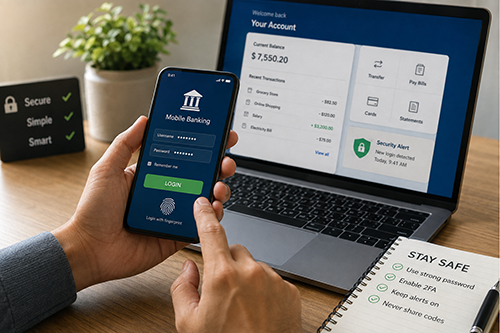
Mobile banking is generally safe when you do a few things right. Here’s what the app protects, what you control, and the real risk: being tricked.
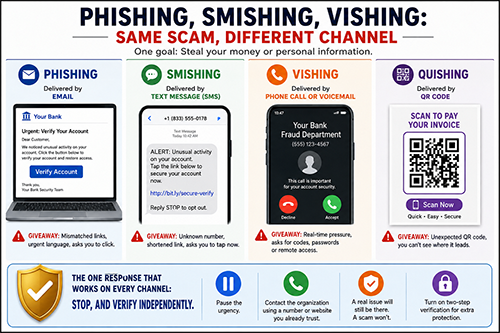
Phishing (email), smishing (text), and vishing (calls) are one scam in three channels. See the differences, spot each, and learn the tell they share.
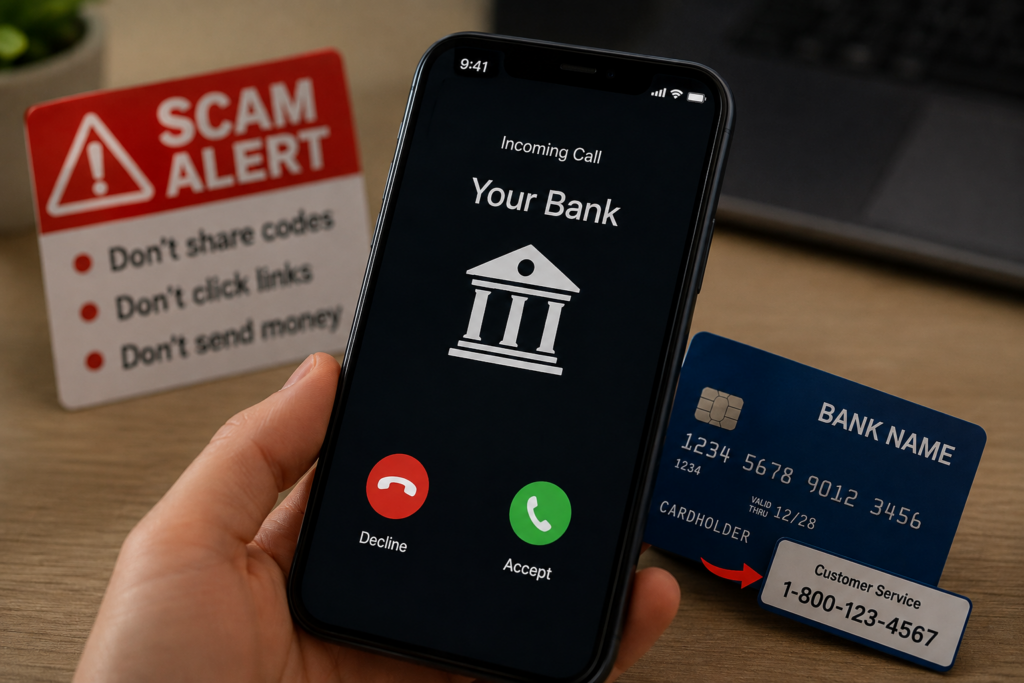
Got a call, text, or email claiming to be your bank? Here is the one rule that beats almost every bank impersonation scam, plus exactly what to do.